Learn To Relax For A Better You

Learn To Relax For A Better YouSometimes, it feels as though our society has placed a stigma on the idea of relaxation. If you’re relaxing, you’re not being productive, after all! The question though, is “is that really true?” Actually, it isn’t.

We’ve all been there. You’re tired. You’re frustrated, but you keep forging ahead anyway, marching through your busy schedule and trying to get everything done. The problem is that your mind and body both start to rebel at a certain point, and you start seeing diminishing returns. The harder to try to stay on task, the more you feel like you’re just spinning your wheels. That’s your cue to take a relaxation break!

Before you get up from your desk to take some much needed down time, it’s important to do a quick internal assessment to see what form of relaxation would actually be most beneficial to you. That matters, and if you properly pair a relaxation technique with the specific way you’re feeling, you’ll reap the maximum benefit, so that when you get back in the game, you feel refreshed and ready to go.

If you’re feeling tired, for instance, what you need is a quick pick-me-up in the form of a piece of fresh fruit. A little jolt of energy to get you through the rest of the day. On the other hand, if you’re wrestling with what seems like an intractable problem, a few minutes spent meditating, or taking the time to get away from your office and go for a short walk would be more helpful. If you’re facing multiple symptoms, say, both physically and mentally fatigued at the same time, then a short power nap is probably in order.

You don’t have to take a very long break, but you should definitely listen to your body when it starts sending signals like that. If you don’t, you’ll only wind up feeling more stressed out and being less productive, as you continue to struggle. Be good to yourself. Listen to your body and take a break when it tells you it needs one.

Exercise May Help With Your Allergies

Exercise May Help With Your AllergiesIf you suffer from allergies, you’re not alone. There are millions of people fighting that battle with you, but this piece will give you an edge. A secret advantage you can use to make dealing with the symptoms a whole lot easier.

The secret? Exercise. No, you don’t have to become a “gym rat,” and spend every waking moment pumping iron, but the research is pretty conclusive. Spending just thirty minutes working up a sweat can reduce your allergy symptoms by as much as 70%! Even better, whereas a number of the medications you can take to control your symptoms will make you sleepy, a good, brisk workout will leave you feeling more awake, alert, and positively crackling with energy.

The science is unclear about exactly what exercise has such a big impact, but one of the leading theories is that by increasing your blood flow, it simply moves the allergens through your body and into your kidneys more quickly, where they can be purged. Another theory is that cardio-intensive workouts help to calm the inflammatory proteins in your nasal passages, although the exact mechanism is unclear.

A nice side benefit of regular workouts (in addition to the weight loss that will inevitably follow) is the fact that it can act to counter those feelings of fatigue and irritability you often feel when you’ve spent the better part of a day sneezing and feeling miserable.

So what exercises tend to be the most impactful?

Any cardio-centered workout will do wonders, as will activities like swimming. In fact, if the town or city where you live has an aquatic center, you can often sign up for classes that see you performing various exercises in the pool, where the drag created by the water gives you a better, more thorough workout than if you were to do those same exercises in an exercise room. Just be sure to take an antihistamine if you’re having difficulty breathing before you begin, otherwise, you could wind up making yourself feel worse, not better!

Excess Weight May Increase Your Back Pain

Excess Weight May Increase Your Back PainIn most cases, excess weight doesn’t outright cause back pain, but the two are still closely related. That’s because the extra weight puts additional pressure on the discs in your spine, which is ultimately the source of that sharp, often debilitating pain you feel in your back.

When your back is hurting, it can be difficult to work up the motivation to get up and move, but it’s absolutely critical. Low impact movement is, of course, the best, so focus on movement that doesn’t make your back feel even worse than it already does. Walking will probably be your go-to exercise, but even that can add to the pain you’re feeling. If it does, your best bet is to walk in a pool. It may sound silly, but walking in shallow water will actually do quite a lot to help alleviate the pain.

One of the best, fastest, safest ways to lose weight is to eat foods that are not calorically dense. The problem with the Standard American Diet (SAD) is that it tends to focus on foods that are high in calories, and low in nutrition. That would be fine if we lived in a Hunter-Gatherer society, but we don’t. Instead of loading up on meats and grains, stick with fresh vegetables as your mainstay. Many of these foods are actually calorie negative, because your body burns more calories digesting them than the foods actually contain. That’s a win for you because you feel full, and your body gets plenty of nutrients, so it doesn’t go into “hibernation mode” and start hoarding fat, which can often happen if you go on one of the starvation, fad diets you find on the internet.

The combination of loading up on fresh vegetables and committing to a walking regimen is a powerful one-two punch that will help you lose the excess weight, and make your back feel better.

Be Aware Of Your Breathing To Improve Health

Be Aware Of Your Breathing To Improve HealthBreathing is one of those things that we take for granted. It’s just not something we think about. After all, you’ve been breathing for literally your entire life – by now, it’s something you’ve probably mastered, right?

Maybe not.

Mindful breathing has been used for centuries to improve both mood and health. Breathe one way, it can help you relax. Change your breathing, and you can give yourself a burst of energy. If you’re intrigued by the possibility, here’s what you need to know to get started:

If you want to relax, the key is controlled, deep breathing. It’s simple. Just follow these steps:
Exhale, emptying your lungs completely
Pause, then inhale very slowly, through your nose, counting to five slowly. When you do this, you’ll want to engage your abs on the inhale.
Hold your breath for 3-5 seconds, then slowly exhale (again, through your nose), completely emptying your lungs again.
Pause and repeat.
Do this for five to ten minutes, and you’ll find yourself in a much calmer and more relaxed state.

If your goal is to increase energy, all you have to do is place your finger over your left nostril, and breathe only through your right. Just normal breaths for three to five minutes. It sounds like a strange trick, and you might be skeptical, but it actually works!

In addition to being able to relax you or give you energy, simply by changing how you breathe, proper breathing before and during exercise can help you feel less tired immediately after, and make it less likely that you’ll suffer from sore muscles. Deep, mindful breathing before and during are critical to getting the most of your workout.

It can be hard to do, especially if you’re engaging in a fairly strenuous exercise like jogging. Many people new to jogging or running have the problem of gulping down air in quick, ragged breaths. If you watch experienced runners though, you’ll see that they are much more Zen-like, drawing deep, slow breaths that follow the rhythm of their stride. That’s what you want to work toward!

Walk Your Dog To Better Health

walk_your_dog_to_better_healthAn apple a day might help keep the doctor away, but do you know what will do even more good? Taking the time to walk your dog, daily. While it’s certainly good for your dog, it can do a lot of good for you too, especially if you’re older, or if you have a desk job that doesn’t require you to get up and move on a regular basis. In fact, research indicates that you’ll not only lose weight, but you’ll also be less likely to need to visit your family doctor if you work in a short 15-20 minute walk with man’s best friend, every single day.

In addition to the physical benefits, there’s a lot to be said for the strengthening of the emotional bond between you and your dog. Again, research shows that spending just a few minutes petting, talking to, or spending quality time with your pet can lower your blood pressure, which is reason enough to consider adding it to your routine. Then, of course, there’s the other social connections it opens up. If you’re out walking your dog, you’re almost certain to be stopped at least once by a passerby, another dog walker, or admiring children who just can’t seem to resist the urge to come up and introduce themselves, all of which tends to put both you and your dog into a better, happier frame of mind.

No matter how you slice it, taking time to walk your dog every day is good for you. It will help your waistline, your overall mental and physical health, and it will give you both something to look forward to every day, and add a bit of structure into the framework of the day. All of those are good things, especially if you’re recently retired and suddenly find yourself with more free time than you know what to do with. If you’re not already doing this as part of your daily routine, make plans to, starting today!

The Right Pillow May Help Ease Your Pain

the_right_pillow_may_help_ease_your_painThere are a lot of things that can cause neck pain that are beyond our ability to control. Thankfully, there are a number of things we can control, and the easiest among them is how we sleep, including what kind of pillow we use when we sleep. Here are some simple things you can do, both in terms of your sleep position and the pillow you use, to make your neck feel a whole lot better.

Your Sleep Position

The biggest thing you can do to alleviate that pain in your neck is that if you sleep on your stomach, stop. Sleeping on your side or your back is much better for your neck, simply because it allows you to rest in a much more natural position, without placing undue stress on the muscles of your neck while you’re sleeping.

Mostly, this comes down to habit. People tend to sleep on their stomachs because it’s what they’ve always done. Fortunately, that’s a fairly easy habit to change, and if you’re currently suffering from chronic neck pain, it’s one you want to start changing immediately.

Your Pillow

One of the best things you can do is invest in a good memory foam pillow, which will conform to the shape of your head and neck, giving you proper support. If that’s a little pricey for you, then consider a good feather pillow. These also conform easily to your head and neck, but remember that they’ll wear out and lose their “fluff” over time, so every two years, you’ll want to replace yours.

Another quick and easy fix you can do, if you don’t want to get rid of your favorite pillow, is to make your own neck support. You can do this by simply tucking a neck roll into the pillow (this is ideal for back sleepers). And of course, if you’re sitting up, riding in a car, on a train, or in an airplane, get a horseshoe shaped neck support pillow so you’re not causing damage while relaxing in those situations.

How Long Will My Muscles Hurt After A Workout?

how_long_will_my_muscles_hurt_after_a_workoutYou’ve undoubtedly heard the term “feel the burn” as it applies to exercise. That burn, uncomfortable as it can be, is actually good for you. It’s the burn and recovery period after that helps you build strength and greater health, not the workout itself. In other words, if you worked out all the time, with little to no rest and recovery in between, you’d actually develop your muscles more slowly than you would if you give yourself the proper amount of recovery time.

The question then, is how much is enough time to recuperate? The answer depends on the kind of exercise you do, but in general, you want to work out until the pain in your muscles is almost, if not entirely gone, before starting again.

If you are a runner, and you run until your muscles ache, then you’ll want to give yourself a full day, which is generally how long it will take for the pain to begin to subside. Of course, there’s some variability here, depending on where you ran – grass is different from concrete, which is different from gravel or sand, and these will impact both your soreness and your recovery time to a degree.

If you’re a weight trainer, your typical recovery time will be about 48 hours between intensive workouts. Again though, there’s some variability here, depending on the muscle groups you’re focused on. Even so, 48 hours is a good rule of thumb to stick with.

The other big factor here is your age. While the specific exercises matter, your age has a lot to do with how long everything will hurt, and how long it will take for your body to recover from the exercise you’re giving it. Here, a good rule of thumb is that every five years you are past 30, add 10% to your recovery time.

What Should I Do If I Fall?

what_should_i_do_if_i_fallHave you seen those YouTube video compilations of people falling in spectacular ways? You probably have. We almost can’t help but laugh at the video footage, but of course, what happens next is no laughing matter. Falls like that can really hurt!

Yours doesn’t have to be as spectacular as some of the ones you’ll find on the videos mentioned earlier in order to be taken seriously, and should you suffer a fall, the first order of business is to make sure nothing’s broken. If you’re not absolutely certain, then head to your doctor’s office or the ER to get an X-ray so you know, because that’s going to determine your next steps in terms of treatment.

Assuming nothing’s broken, your next call should probably be to our chiropractic office. Between the time you place the call to our chiropractor’s office and the time of the appointment, be sure to apply ice packs to any parts of your body stiff, swollen, or sore, courtesy of the fall you suffered. That will help leach out the swelling and reduce inflammation, which will make it easier for us to treat you.

On the day of your appointment, you’ll be given a thorough exam, and be asked a number of questions about the circumstances surrounding the fall. Even if the details are a bit hazy (and they might be), answer as completely as you can, because this too, will ensure that your injuries are properly understood and treated.

Nobody likes being on the sidelines of life, and a painful fall can certainly put you there. The good news though, is that your chiropractor can help reduce, and ultimately eliminate the pain you’ll undoubtedly be in, in the days immediately following the fall, and can get you back in the game before you know it.

Acquire A Taste For Health Food With These Tips

acquire_a_taste_for_health_food_with_these_tipsLet’s face it, for the overwhelming majority of us, foods like kale, broccoli, and Brussels sprouts aren’t the foods we tend to reach for when we get a sudden craving for a snack. They’re just not our go-to choices. If we eat them at all, we do it because we know they’re good for us. We tend to treat them as something of a necessary evil.
Wouldn’t it be great though, if we could retrain our brains (and our taste buds) to really, genuinely love foods like this? Actually, you can! Not only can you make it much more likely that your children will love the healthy stuff, it’s not too late for you either. Here are a few things you can do:

It Starts Before You’re Born
A portion of our food preferences come from the kinds of food our parents feed us, and that includes the nourishment we get before we’re born. If a pregnant woman eats plenty of broccoli, kale, spinach, and the like, those foods will alter the composition of the amniotic fluid that nourishes the child growing inside her, which leads directly to influencing tastes and preference after the child is born. The earlier you start feeding your child these kinds of foods, the better, and what could be earlier than this?

Masking
One of the reasons we (children and adults) dislike the healthy foods is the fact that many of them taste bitter. There are a variety of ways of masking the bitter flavor – everything from butter, to salt, to cream cheese. Try mixing the healthy foods you want to learn to love with these for a month or two, gradually reducing your use of the masking agent until you’re enjoying those foods plain.

Taste Is Relative
Finally, understand that taste is relative. Your taste buds grow accustomed to the foods you eat, and overtime, the foods you eat the most of become the “new normal.” If you cut out the sweets, and bulk up on the healthy foods, and you stick with that for at least three weeks, you’ll actually start to crave the foods you’re eating more of. The trick, of course, is in sticking with it long enough for that to happen!

The bottom line is, yes! It is absolutely possible to learn to love the foods that are the best for you, and there are lots of obvious benefits for doing so.

Will Yoga Help With My Pain?

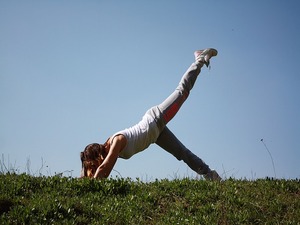
will_yoga_help_with_my_pa_122802_225545This question comes up more frequently than you might imagine, and the short answer is yes. Yoga, in any of its forms, will almost certainly help manage back pain, and will even play a major role in reducing, and ultimately eliminating it.

Yoga forms are fantastic ways to introduce low-impact, low-intensity stretching into your daily routine. The various positions you’ll adopt and hold, moving slowly from one position to the next are designed to gently work and strengthen nearly every muscle in your body.

The muscles in your back and abdominal region are the workhorses of your entire musculoskeletal system. As those muscles go, so goes the rest of your body. By practicing yoga regularly, you put yourself on the path of gradually building these muscles, and ultimately, giving yourself a much broader range of motion than you would otherwise have.

Yoga is especially beneficial for people aged 55 and up, who often suffer from periodic lower back pain and less pliable hamstring muscles. The yoga forms not only limber these muscles up, but also improve blood flow and circulation, which helps to not only nourish them, but rid the body of toxins, both of which make you feel better.

In addition to that, proper yoga forms help place the body into proper alignment, which improves both posture and balance. Perhaps the greatest benefit of practicing yoga, however, comes simply from the increased body awareness it gives you. The quiet, meditative state required for proper yoga exercise is ideally suited to stilling the voices in your head and truly listening to the messages your body is sending you. Once you are fully in tune with those messages, you’ll find that you’re better able to modify your routine to address issues you discover yourself, simply by listening more carefully to your body.

For people of any age, yoga is a wonderful form of exercise. If you’re too shy to take classes, you’ll find a plethora of helpful videos on the web.