Increase Your Water Intake During The Summer

Conventional wisdom holds that in order to stay healthy, you need to drink at least eight 8-ounce glasses of water every day, which is not quite two liters. That’s all well and good for the spring, autumn and winter, but what about those hot summer months? Should you be drinking more, and if so, how much more?

It’s an excellent question, and one that comes up every summer. The short answer is yes! You absolutely should increase your water intake during the summer. Below, we’ll give you some good guidelines regarding how much.
The first thing to bear in mind is that there’s no one “right” answer to this question. Since everyone’s physiology is different, your sweet spot where summertime water intake is concerned will be different from your neighbor’s. That said, in general, you want to add one liter per day to your water intake, bumping it up to three liters a day.

If you spend a lot of time outside in the sun, then you’ll want to add another liter to that, for a total of four. If you work outdoors, or if you’re in relatively poor health, then you’ll want to add another liter on top of that, for a total of five.

Simply drinking more water, though, is only part of the equation. You’ll also want to augment your water intake with all natural fruit juices (not from concentrate) and things like coconut water, all of which help your body to retain it.

Further, if you work or play hard in the sun, then you’re going to be losing lots of nutrients your body needs, and a drink like PowerAde or Gatorade will help replenish you in addition to quenching your thirst.

At the end of the day, the reality is that it’s almost impossible to drink too much water, so it’s always better to err on the side of more, rather than less. Stay cool this summer, and more importantly, stay hydrated!

Whiplash Can Be Caused By More Than Just Car Accidents

What image pops into your mind when someone says the word “whiplash?”

If you’re like most people, the image is of a neck brace, and the first thing you think of when you hear the term is “car accident.”

It’s no surprise, really. Auto accidents are indeed the leading cause of the injury, but the simple truth is that you can get whiplash from a variety of other sources as well.

Before we get to that, it’s important to take a moment to explain exactly what whiplash is.

In the simplest terms, it’s a type of neck injury that results when your head and neck are suddenly and unexpectedly jolted forward, then backward with considerable force.

The force of the movement puts tremendous strain on the muscles of your neck, which causes the soreness and makes it difficult to turn your head for a considerable period of time until those muscles have had a chance to heal and recover.

Based on that description, it’s easy to see how many other activities could potentially cause the condition.

Horseback riding is an example, especially if you’re riding at full gallop. Horses don’t come with shock absorbers after all, and that repetitive bucking and rolling motion can easily be of sufficient force to make your neck unexpectedly sore after a ride.

The same is true from, say, falling off of a bicycle. Granted, if you’re wearing a helmet, that’s going to minimize the chance of serious head trauma or concussion, but the helmet does absolutely nothing in terms of preventing the whipping motion of your head itself, which is where the pain in your neck ultimately comes from.

For that matter, any type of trip or fall can potentially lead to whiplash. It all depends on how violently your head was forced back and forth during the course of your fall.

The good news is that whiplash is easily treatable, and your chiropractor can recommend a reliable course of treatment that will have you feeling better in no time, so don’t ignore that pain in your neck – you don’t have to just live with it!

Travel With Less Pain With These Simple Tips

Vacationing is supposed to be all smiles and fun, but the reality is that traveling to get there can be a real pain in the neck (and back). If you’re flying coach, the seats are tiny and not very comfortable.

If you’re driving, you may find yourself sitting in the same position for hours on end, and that’s before we even mention the act of loading and unloading the luggage, and toting those heavy suitcases up and down stairs.

Fortunately, travel doesn’t have to be a painful experience. Here are a few simple tips that can help you avoid the pain, so you can focus on the fun.

• Take Regular Stretch Breaks – This is easier to do if you’re driving, but you can usually arrange it if you’re suffering through a long flight too. Just get up and stretch about once an hour. It doesn’t have to be a long break; you’ve just got to provide a bit of relief to those cramped muscles at regular intervals.

• Say No To Duffels – A lot of travelers use a simple duffle bag as an overnight bag, but this is a suboptimal choice as far as your back is concerned. A backpack, worn properly, is a much better option that will virtually eliminate the possibility of strain or sprain.

• Be Mindful Of Your Posture – There’s a right way and a wrong way to lift and carry luggage. Too often, people get in a hurry and don’t think about posture or proper lifting techniques when handling luggage, and that’s unfortunate, because it’s one of the leading causes of vacation-related back injuries. That’s a shame, because a little mindfulness can avoid most of the trouble!

• Ship It – One simple way to avoid the issue altogether is to simply ship your luggage ahead of you to wherever you’re going. While this doesn’t completely eliminate your need to handle it, it does minimize the amount of time you have to spend dealing with it, and every little bit helps.

While these tips won’t completely eliminate your chances of back injury on vacation, they’ll certainly go a long way toward minimizing them, which means you’ll get to spend more time focusing on relaxing and having fun.

Parenting Pains Can Be Felt In Back, Neck and Shoulders

You’re probably aware that you can get RSI (Repetitive Strain Injuries) from playing a variety of sports such as golf or tennis. Those kinds of injuries are fairly common and often talked about. What’s less commonly mentioned is the fact that the act of parenting carries its own risks, and some of your regular parenting tasks may be causing or contributing to the aches and pains you’re feeling.

Think about it for just a moment. How many times have you picked up your toddler and toted him or her around on one hip?

How many times have you hefted up your baby’s car seat and walked it, fully loaded, up or down a couple flights of stairs?

If you have an infant, both of those questions probably brought vivid images to your mind’s eye, and with good reason. They’re incredibly commonplace, and unfortunately, they can wreak havoc on your body.
At the root, the problem comes down to one of posture.

Think back to the example of carrying a child on one hip, while you’re walking through a store, for example. That extra weight added to one side of your body causes you to be off balance. You compensate by adjusting your position to accommodate the child, but your body is simply not accustomed to being aligned that way, and because of that, it won’t take long before walking like that causes stiffness and soreness.

The same is true of our second example, carrying a heavy child carrier up and down one or more flights of steps. All the weight is out in front of you, which puts tremendous strain on your neck and shoulders, which again, over time, can lead to chronic pain. Who knew that proper posture was such an important part of good parenting?

If you find yourself suffering from RSI’s because of acts such as these, there’s good news. The problem is entirely fixable, and your chiropractor can give you tips and guidance on how to properly perform those tasks without straining your muscles or mucking up your posture.

Best And Worst Positions To Sleep When Having Back Pain

If you are suffering from back pain now, or have suffered from it in the past, then you know how miserable it can be, especially when you’re trying to get a good night’s sleep.

It’s virtually impossible to get comfortable. No matter how you move, the pain just seems to follow you. In fact, how you sleep may be contributing to the problem, and it could prolong the duration of your pain.

That’s especially true if you’re a stomach sleeper, as that position has the unfortunate disadvantage of straightening out, and putting added strain on your spine, which can make the pain you’re already feeling even worse.
Fortunately, there are a few simple things you can do to help alleviate your back pain and get a better night’s sleep.

The first and best solution is that if you sleep primarily on your back, place a pillow under your legs at the knee. This allows your spin to maintain its natural alignment.

If you’re primarily a side-sleeper, then be sure to use a full body pillow between your knees, and draw them up slightly as you drift off. If you’re a stomach sleeper, the best advice is to stop altogether. Although, if you just can’t sleep in any other position, then you can help mitigate the strain by putting a pillow under your pelvis. It’s not perfect, but it helps some.

The biggest thing, though, is to move at regular intervals. No sleep position is optimal if held for an excessive period of time, and when you move around, you’re giving your back and various muscle groups a chance to rest and recover.

Also note that finding the “right” mattress and pillow will go a long way toward getting a better night’s sleep, back pain or not, and it’s well worth spending a little extra to get something that really works for you.

Top 20 Sports That Cause Injury According To Recent Study

Can you name the sport that causes the most injuries among 13 to 17-year-olds? It’s probably not the sport you’re thinking!

A recently released study on sports-related injuries among high school students is quite revealing. Check out the summary below, and keep these figures in mind if you have a son or daughter who’s actively involved in sports!

#1 – Basketball: 74 percent male/26 percent female – Most common injuries are strains and sprains (ankle)

#2 – Football: 95.7 percent male/4.3 percent female – Most common injuries are strains and sprains (finger)

#3 – Soccer: 52 percent male/48 percent female – Most common injuries are strains and sprains (ankle)

#4 – Baseball: 88.8 percent male/1.2 percent female – Most common injuries are contusions and abrasions (face)

#5 – Cheerleading, Dance and Gymnastics: 9 percent male/91 percent female – Most common injuries are strains and sprains (ankle)

#6 – Boxing, Wrestling: 90.6 percent male/9.3 percent female – Most common injuries are strains and sprains (shoulder)

#7 – Softball: 7.9 percent male/92.1 percent female – Most common injuries are strains and sprains (ankle)

#8 – Volleyball: 21.1 percent male/78.9 percent female – Most common injuries are strains and sprains (ankle)

#9 – Ice Hockey: 88.5 percent male/11.5 percent female – Most common injuries are contusions and abrasions (head)

#10 – Snowboarding: 75.9 percent male/24 percent female – Most common injuries are wrist fractures

#11 – Weight Lifting: 83.9 percent male, 16.6 percent female – Most common injuries are strains and sprains (finger)

#12 – Track and Field: 47.6 percent male/52.4 percent female – Most common injuries are strains and sprains (ankle)

#13 – Lacrosse: 73.6 percent male/26.4 percent female – Most common injuries are contusions and abrasions (head)

#14 – Horseback Riding: 23.6 percent /76.4 percent female – Most common injuries are contusions and abrasions (head)

#15 – Ice Skating: 52.4 percent male/47.6 percent female – Most common injuries are strains and sprains (wrist)

#16 – Skiing: 62.1 percent male/37.8 percent female – Most common injuries are fractures (head)

#17 – Tennis: 50 percent male/50 percent female – Most common injuries are strains and sprains (ankle)

#18 – Field Hockey: 9.8 percent male/90.3 percent female – Most common injuries are contusions and abrasions (finger)

#19 – Rugby: 79.1 percent male/20.9 percent female – Most common injuries are strains and sprains (head/neck)

#20 – Bowling: 49.4 percent male/50.7 percent female – Most common injuries are strains and sprains (finger)

Did you find your child’s sport on the list? If so, just be aware of the prospect of injuries in your future! You can get more details here: http://product-injuries.healthgrove.com/

Prevent Injury While Gardening

It shouldn’t come as much of a surprise, but the first few weeks of spring see a predictable spike in the number of reported back, neck, shoulder, elbow, knee and related injuries. A lot of these happen when we come out of our winter hibernation and get back out into the yard or garden.
Sadly, a lot of these injuries could be prevented. While it’s true that nothing is foolproof, if you keep the following three tips in mind, you’ll dramatically reduce your chances of getting hurt as you prep your garden.

1) Be Mindful – This can be an especially easy thing to forget in the spring because you’ve been cooped up in the house all winter and you’re much more interested in getting your garden in shape than you are in thinking about safety.

Unfortunately, that’s when accidents are most likely to occur. All it takes is one misstep. One instance of trying to pick up something heavy and doing an improper lift or twist, and you’ll find yourself doubled over in agony. Being mindful of what you’re doing and how you’re moving is the No. 1 way of minimizing injury, no matter what the specific situation.

2) Try Not to Aggravate A Prior Injury – A close second to simple carelessness is the fact that if you have a previous injury, you’re just statistically more likely to suffer another one, or make your existing injury worse.

That just comes with the territory sometimes because sometimes we try to do too much when we’re hurt. We tend to overcompensate, which can make things worse. Don’t be that person!

3) Avoid Lack of Winter Exercise – This is another big one. It’s entirely understandable, because during the cold winter months, we tend to go into something close to hibernation. The sudden flurry of activity in the spring after months of relative inactivity can’t help but increase your chance of a mishap or injury.

Fortunately, this one has an easy fix. Just be sure you get plenty of exercise all through the winter months so that the activity in the spring won’t be such a harsh transition.

How To Start Exercising After You Just Plain Haven’t Been

It’s not something most people are proud of, but it happens.
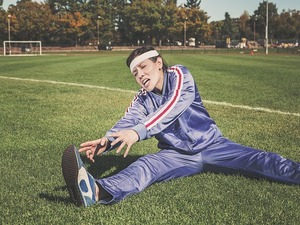
You start off with a strong commitment to regular exercise and better health and then, for whatever reason, you fall off the wagon for a while, and perhaps even for an extended period.

When you get back to the place where you want to start exercising again, it may be tempting, or even reflexive to think you can pick up right where you left off. However, doing that is almost certain to be a recipe for disaster, because the longer you’ve been out of the habit, the more your muscles have atrophied, and the more “muscle memory” you’ve lost.

Fortunately, it’s not hard to get back into the swing of things, but following the tips below will help minimize your chances of injuring yourself as you get back up to speed:

1) Start Slow – This is the single best thing you can do for yourself if it’s been a while since you’ve worked up a good sweat using your exercise routine. Depending on how long it’s been, don’t be surprised if you can’t finish the routine you used to use on a regular basis. You’ll find your groove again and be back in top form in no time, but to get to that point, you’ll want to take slow, measured steps. Remember, you’re looking for progress, not perfection.

2) Be Patient – This builds on the first point, and is every bit as important. If you’re in too big a hurry to get back to where you were, you’re going to pull or strain something. Rather than helping yourself, all you’ll accomplish will be to slow, or even stall your progress as you recover from what is a totally preventable and avoidable injury. Don’t be in such a rush to see results that you wind up setting yourself back!

3) Reprogram Your Brain – Finally, in order to minimize your chances of falling off the wagon in the future, reprogram your brain and learn to love your exercise routine. One of the best ways to do this is to give yourself some small but well-liked treat after you exercise. It takes three weeks for a new behavior to become habit, so if you start now, then you’re just 21 days away from victory!

Even Small Accidents Or Fender Benders Could Cause Injury

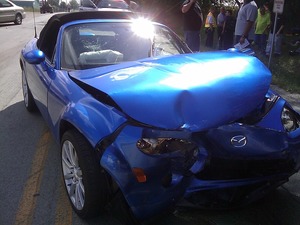
If you’ve been in a minor accident and there’s little or no visible damage to your vehicle, you might be tempted to skip heading to your chiropractor. After all, if there’s no damage visible to your car, there shouldn’t be any damage to you, right?

It would be great if that were the case, but sadly, flesh and bone just aren’t as durable as the steel frame of your car or truck. Long before solid steel starts showing signs of damage, your body will feel the effects.

That makes sense when you think about it. After all, if you’re cruising along at 20 or 30 miles an hour and come to a sudden stop, there are bound to be impacts to your body.

One thing that can often give you a false sense of security is the fact that when you get into an accident, even a relatively minor one, your body is flooded with adrenaline and you may not feel even the least bit sore in the hours immediately following the accident.

Don’t let that fool you, though! By the next day, you’re almost certain to feel it, and pain is, after all, your body’s way of telling you something is wrong. The very worst thing you can do is to ignore it.

After you suffer from any accident, even a small and relatively harmless one, you still owe it to yourself to go get checked out by your chiropractor to assess the damage you may not be able to feel right away. It will almost certainly come back to haunt you later.

From a practical perspective, that makes sense because if you go to the doctor right away and there is a problem, it can be corrected while it’s still small and easily fixed. If you wait, it could fester and get worse, and that’s never a good thing.

Are Stress Balls A Good Way To Relieve Stress?

If you’ve spied more than a few people in your office carrying little balls around in their hands lately, you may be wondering what all the fuss is about. Is it some new trend you haven’t quite caught onto yet?

Actually, the answer to that question is yes! Stress or massage balls have been around for decades, but in recent years, they’ve been surging in popularity, and it’s no wonder! These humble objects may be small, but they pack a powerful punch in terms of stress relief and provide other useful benefits as well.

To use them, all you have to do is roll them around in your hand, or squeeze and hold them for several seconds.

Some stress balls have bells inside them which make an appealing sound as you manipulate them in your hand. The sound combined with the repetitive motion is surprisingly relaxing and can help ratchet your stress levels down by several notches. That’s perfect, because these days, our high tech, 24/7 lifestyles have put us under more stress than ever, and anything we can do to lighten that load has to be counted as a win!

In addition to being relaxing, this simple motion can increase your dexterity as you become increasingly adept at moving them around, and even reversing their direction when you use them. The simple act of holding and squeezing can also be beneficial, as it not only flexes the muscles in your hands, but your forearm as well.

Who knew that simple little balls could do all that?

Consider it a secret that’s been hiding in plain sight, but now that you know it, you owe it to yourself to take advantage of that knowledge. Stress balls are inexpensive, powerful tools you can use to make yourself feel better, and who wouldn’t want that?