Get Joint Pain Relief Without Pain Pills

If you suffer from any kind of joint pain, then you know what a misery it is.  Pills help, but you may not like taking them for fear of developing an addiction, or you might be worried about how they’ll interact with some of the other medications you’re on.

Fortunately, there are many viable alternatives available that will help take the edge off of the pain you’re experiencing.  Here are a few to consider:

Alternate Ice and Heat

If you’re just using ice, or just using heat, you’re not getting the maximum benefit from it.  By alternating ice and heat though, you’ll find that your pain level will drop significantly.  The trick here is to not use either for an extended period of time.

Start with ice and leave it in place for no more than fifteen minutes, then switch to heat.  Then thirty minutes of neither and go back to ice.  You’ll be amazed at how well it works!  It’s also worth mentioning that you can get the same basic effect by alternating something like Icy Hot and Biofreeze on the area that’s causing you pain. Although if you’d rather not spend the money on these products, ice and heat are both easy to come by.

Capsaicin

Capsaicin is the stuff in peppers that makes them hot.  It can also be found in a number of pain relieving creams and ointments and is incredibly effective in terms of providing pain relief.  In fact, a study conducted by Case Western Reserve University found that eight out of ten participants who suffered from arthritis had less pain after applying capsaicin-based ointment four times a day for two weeks, making it a great alternative (or addition) to pain medication.

Bulk Up On Omega3s

Fish oil tablets are good for you for a variety of reasons, but many people aren’t aware that Omega-3 fatty acids have anti-inflammatory properties.  If you suffer from any kind of joint pain, taking 1000mg of fish oil every day will help ease the pain in your aching joints.

The bottom line is, there are options available besides pain pills.  Experiment with these and mix and match as you prefer.  Your joints will thank you.


Can Stress Cause You Physical Pain?

Can stress cause physical pain?  It’s a great question and one we get on a fairly regular basis.  The short answer is yes, but getting to how and why requires a bit of explanation.

Stress is caused by the hormone cortisol, which controls our “fight or flight” response.  As stress levels increase, the muscles in your body tend to tense up in anticipation of an imminent threat.  The more stress you find yourself under, the more your muscles will tense.

Under normal conditions, stress only lasts a short while. However, in our modern “always on” world, many people find themselves in high stress situations that last for weeks, months, or even longer.  When your muscles stay tense for extended periods of time, it can absolutely cause real, physical pain.

It gets even worse than that, however, because pain makes us worried and anxious, which leads to higher levels of stress. This only serves to make your muscles even more tense, making the pain even more severe.

Of course, high stress is only one possible cause of back, neck, and shoulder pain, so the next logical question is how can you tell if this particular pain is being caused by stress or some specific injury?

Stress-related pain tends to have the following characteristics:

  • The muscle pain tends to be diffuse and not tied to a specific location. Some people who suffer from stress-induced pain swear that it seems to move around from one part of the body to another.
  • Muscles tend to be tender in certain areas of the body that you know you haven’t strained or pulled.
  • Your sleep patterns will be disturbed, and you’ll feel generally fatigued and tired, in addition to feeling sore.

Perhaps the best way to confirm or rule out that your pain is being caused by stress is to take action to reduce the amount of stress you’re under.  The best way to do that is to get up and take a relaxing walk, at least fifteen minutes a day, every day.

Science has shown that a fifteen minute walk in the woods will reduce your body’s cortisol by as much as  50 percent.  If you don’t live in an area with woods nearby, don’t worry.  A fifteen minute walk in an urban setting will still reduce your cortisol levels by up to 25 percent.  Once your stress levels begin to fall, the pain caused by your increased stress will recede on its own.  If it doesn’t, then that’s a pretty good indication that your pain is being caused by something else.

Is Fasting Beneficial For Your Health?

Fasting is hardly a new idea.  Ritualistic fasting has long been a part of various religious traditions, and during our hunter-gatherer days, our bodies were optimized to go for brief periods without eating.

More recently, many fad diets have sprung up around the idea of periodic fasting, and the proponents of such diets claim a whole raft of health benefits including rapid weight loss, a reduction in risk factors for both heart and kidney diseases, and even as a ward against cancer.  The question is, are those claims backed up by science, or is it mostly hype and marketing?

It’s a fair question, and the answer isn’t as straightforward as it might first seem.  Let’s start by talking a bit about what happens when you fast.  First and foremost, you’re changing the focus away from what you eat to a focus on when you eat, and that’s an important distinction.

When you don’t eat, the supply of glucose in your body begins to decrease.  Glucose is fuel for your cells and every cell in your body needs it to function properly. So as the supply begins to dry up, your body starts looking for other sources of glucose, which is stored in both muscle and fat as glycogen.

After a few days without eating, your body will kick into “Ketosis Mode,” which means that it starts to burn fat as its primary source of glycogen to preserve your muscle mass.  That’s a good thing and you will lose weight as this begins to happen, but it’s got some downsides, including halitosis (bad breath) and constant fatigue.  This is your body rebelling against the idea of going without food for so long, and at this point, the longer you continue to fast, the more you risk things like kidney and liver damage.

The short answer then is yes, fasting does have some real, tangible benefits, although many of the claims about protecting your heart, kidneys, and warding you against cancer aren’t yet backed by a sufficient body of evidence to say them with any real certainty.

If you decide it’s something you want to do, you should consult with your doctor and let him or her know how any why you’re planning to.  Be sure to let them  know every type of medication you’re on, and any supplements you might be taking because these things will affect how well fasting will work for you.


Simple Tips To Increase Your Energy The Healthy Way

If you’re like most people, you start strong in the morning, but by mid-afternoon, you start to run out of gas.  By the time you get home at the end of a workday, you’re exhausted and barely functional. You grab some dinner and maybe catch a couple hours of TV before bed, then start the process all over again the next day.

Why is it that our modern lives are so exhausting?  Are there ways you can keep your energy levels up throughout the day, feel better, and be more capable of handling any obstacle that gets tossed in your way?

The answer is categorically yes! Even better, it’s really easy to do.

Just follow these simple steps:

  • Breakfast – It really is the most important meal of the day. Think about it, when you wake up, you’ve basically been fasting all night and your body is in dire need of fuel.  Don’t skimp on breakfast, give your body what it needs!  A light breakfast is okay if that’s all you’ve got time for, but a hearty breakfast is even better, so eat up!  It will give you the fuel you need to power you through the early part of the day.
  • Learn To Love Carbs – Many people are increasingly health conscious, and for lunch, they try to grab something that’s high protein and low carb. Salads are an increasingly popular lunchtime option, but the problem is that salads don’t contain anything in the form of quick energy.  Carbs are the quick energy solution you’re looking for.  You don’t have to go crazy here, but if you want mid-day energy, then carbs are your new best friend.
  • Snack! – Don’t be afraid of mid to late-day snacks, either. If you love fruit and nuts, then there are a number of healthy “trail mix” options you can keep at your desk for a quick burst of energy any time you feel yourself lagging.  Don’t wait until you’re actually tired to break into your stash of snacks.  Be proactive and snack early and often.
  • Learn To Relax – Stress can leave us feeling fatigued and burned out. Don’t let that happen to you.  Take a fifteen-minute walk every single day or listen to your favorite music on your way home from work.  The more you can do to reduce your cortisol levels, the better and more energized you’ll feel.
  • Set A Regular Bedtime – Be sure to stick to it! If you don’t get enough sleep, then you’re going to start the next day off with a strike against you. Don’t set yourself up for failure.  Be sure you schedule plenty of sleep time (you need at least eight hours, so don’t skimp), and you’ll give yourself a tremendous head start for the next day!

If you put these simple tips into action, starting right now, you’ll find yourself brimming with energy throughout the day.

Why Is My Body Making Sounds As I Get Older?

Do your joints sound like they’re filled with Rice Kripsies when you stand up and move around?  It’s a fairly common phenomenon and tends to happen more often as we get older. In most cases, it’s perfectly normal and nothing to be worried about.

There are two primary causes of normal popping and cracking sounds.  The first is the sound you sometimes hear when you shift and flex your muscles.  Sometimes you’ll here a sharp snapping sound, which is caused when muscles and ligaments move across one of your joints.  They’ll “catch” on your joints as they’re dragged across them, and then, when the snap back into their normal position, you’ll hear a snapping sound.

The most common popping sounds are actually gas, but not of the intestinal variety.  Joint capsules are filled with something called synovial fluid, which acts as a lubricant for your joints.  This fluid contains a variety of dissolved gasses, and when joint ligaments are stretched, it causes the pressure on the capsule to change, which releases carbon dioxide in the form of bubbles.  The cracking noise you hear are the sounds of those bubbles popping.  That’s why your back, knuckles and other joints pop when you crack them.

Both of these sounds become increasingly common as you get older and begin to lose muscle mass, because the loss exposes more of your bones.

Having said that, there are strange sounds that aren’t normal, and in fact, are a sign of a deeper, underlying problem.  For instance, there’s a condition called crepitus which occurs when there’s damage to the cartilage inside your joints.  There are lots of things that can cause cartilage damage but the two most common are simple age and overuse.  It’s distinguished by peculiar “clunking” or grinding noises.  It’s not painful, because cartilage doesn’t have nerve endings, but it can lead to swelling, numbness, and ultimately loss of functionality.

So are the sounds your body is making normal, or a sign of a potentially dangerous condition?  In most cases, they’re probably harmless. If they keep happening, it pays to mention them to your doctor to rule out something that could pose a serious problem down the road.

Tips and Techniques For Lifting Heavy Objects

Time for a quick refresher.  Most people intuitively know the things this article will include, but knowing something and putting it into daily practice are two different things.  The most common cause of acute back pain is a sudden injury to the ligaments and muscles that support your back. The most common way those ligaments and muscles can sustain injury is via improper lifting of heavy objects.
If you’ve already hurt your back, then it’s time to focus on the cure, rather than prevention.  Prevention will be crucial once you’re healed, so that you don’t get hurt again.  In terms of the cure, there are a few simple things you can do, including:

  • Gentle, low impact exercise
  • Therapeutic massage
  • Alternating ice and heat (with ice being the most beneficial here)
  • And over the counter pain medications to help reduce swelling and inflammation

Once you’re feeling better, let’s review the following proper way to lift heavy objects  to minimize your risks:

  • Assess the object in question. Is it ripped, torn, or weakened in some way, such that when you try to lift it, it will be difficult to grasp, or begin to fall apart, causing you to twist unexpectedly?  If so, find an alternative to lifting it.
  • Test before committing. Give the object a hearty shove to gauge its weight.  Is it something you can conceivably lift?  If not, don’t even try without help.
  • Plan your route – Don’t lift something heavy without knowing where you’re going to take it, and ultimately, where you’re going to set it down. Be sure that the path between those two points is clear of obstructions so you don’t have to do any fancy footwork en route.
  • Lift with your legs, more than your back. Start in a squatting position and allow your powerful leg muscles to bear the brunt of the lift.  Your back should play only a supporting role.

If you do those four things, then you’re much less likely to suffer an injury while lifting, and your back will thank you for it!

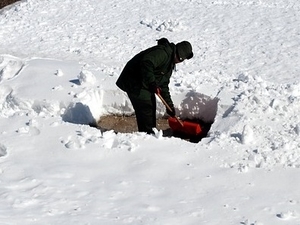
Snow Shoveling Injuries Are More Common Than You Might Think

Quick, how many people do you think are injured shoveling snow every year?

The number may be higher than you imagine.  According to a study recently published in the American Journal of Emergency Medicine, more than 11,000 American adults are sent to the ER every year with injuries directly related to shoveling snow, along with more than 700 children under the age of 19.

The study, which looked at emergency room statistics from 1990 to 2006, found that shoveling snow sent people to the ER with a variety of injuries. Some examples are  aching backs,  head injuries, broken bones and even heart problems.

Dr. Gary Smith, MD, DrPH, and the director of the Center for Injury Research and Policy at the Research Institute of Nationwide Children’s Hospital in Ohio had this to say about the findings:

“Not only is the heart’s workload increased due to shoveling snow, but cold temperatures also add to the chances of a heart attack in at-risk individuals.”

While heart problems were the deadliest of the snow shoveling-related injuries unearthed by the study, the most common were back strains and sprains.  The unfortunate reality is that the basic design of the snow shovel hasn’t changed much over the past hundred years, and they’re not at all ergonomically designed.  Because of this, people who use them have to bend over farther, then support the added weight of snow on the shovel, which can easily lead to painful strains and sprains.

There are a few simple things you can do, however, to minimize your risk of injury:

  • Don’t just dive in, warm up first! Shoveling snow should be treated no differently than any other form of exercise.  A warm up is a must!
  • Wear proper shoes – Try to choose rubber soles with good traction so you’re less apt to slip and fall
  • Push, more than lift – Lifting the heavy shovel puts added stress and strain on your body. If you must lift, make sure to lift with your legs and not your back.
  • Pace yourself – don’t try to get it all done at once. Breaks are not just okay, but recommended!

If you keep those things in mind as you break out your winter gear and grab the shovel, you’ll go a long way toward minimizing your risk of injury.


Are There Health Benefits To A Face Massage?

If you’ve ever enjoyed a trip to the day spa, you’ve probably had a facial. At some point while you’re reclined back and enjoying the sensation, you’ve probably been treated to a face massage.

You may be wondering then, other than feeling incredible, are there any tangible health benefits to getting one?  The answer may surprise you!

Obviously, there are a raft of cosmetic benefits to getting a face massage.  It makes wrinkles less likely to form, especially around the corners of your eyes. In addition, it leaves your skin looking and feeling both healthier and younger.  Those are all good things, but of course, it would be hard to categorize them as tangible health benefits.

In that vein, the single biggest benefit you’re likely to see is  that a face massage is an incredibly relaxing experience, and anything that helps you relax also helps you to de-stress.

The simple truth is that we live in a fast-paced, “always on” world.  If you’re like most people, there are days when you don’t really know if you’re coming or going.  Long hours at work.  A million things to do when you get home.  Planning the next day.  All of those things cause your levels of a hormone called cortisol to rise, and cortisol causes stress.  The more of it you have in your body, the more stressed out you feel.

Stress won’t kill you directly, but it is a gateway to bad health.  You can link stress directly to a number of potentially deadly conditions, including high blood pressure and heart disease.  So, anything you can do to reduce stress is going to be good for your overall health.

Fortunately, you don’t have to go to a day spa to enjoy the benefits of a face massage.  It’s something you can do yourself, in the comfort of your own home. Best of all, it only takes a couple minutes every day to reap the stress-reducing benefits.  Try it yourself and see!  You’ll be amazed at the difference it can make.